
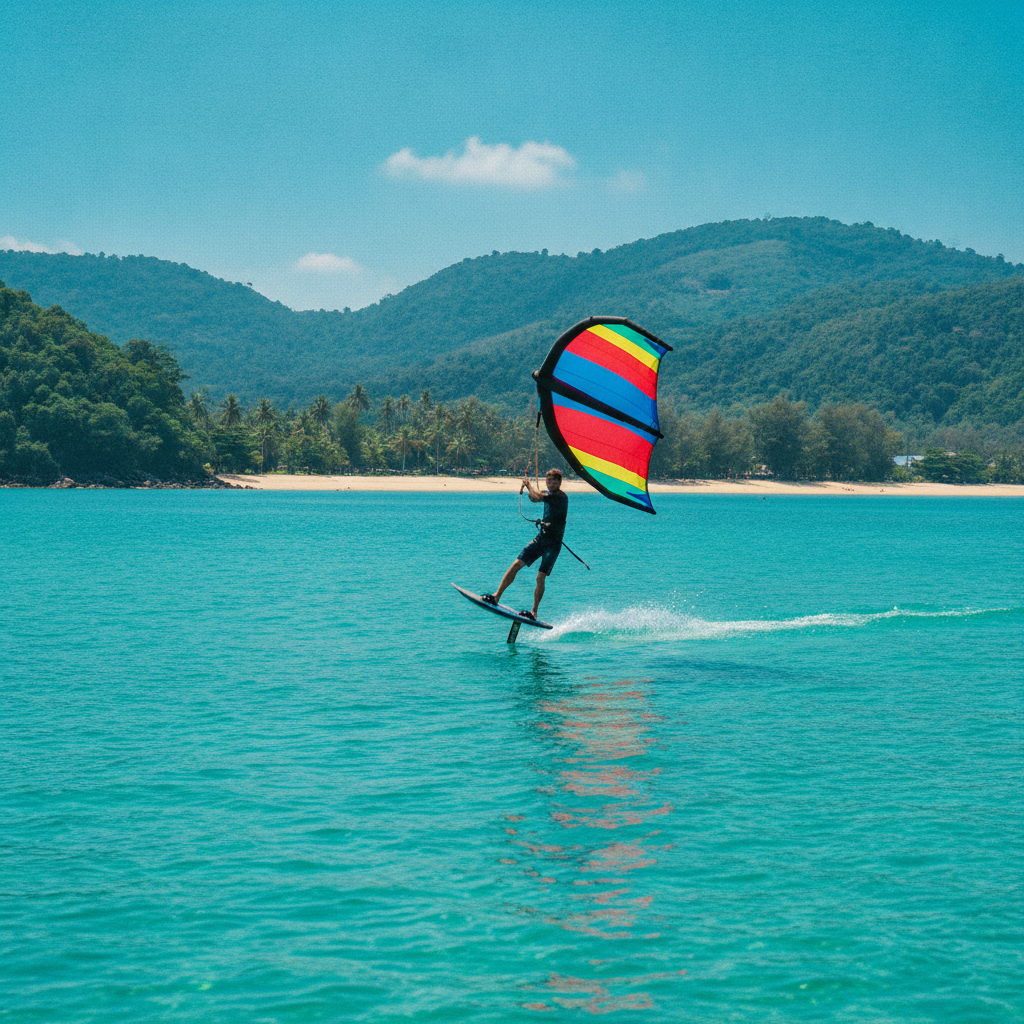
Welcome, fellow water sports enthusiast! If you’re dreaming of gliding effortlessly across turquoise waters, propelled by the wind, then Phuket is your perfect destination for wing foiling. This step-by-step guide is designed to help you, whether you’re a complete beginner eager to try something new or an experienced rider looking to navigate the island’s best conditions in 2026. We’ll cover everything from seasonal wind patterns and top spots to essential learning tips and safety advice, ensuring your Phuket wing foiling travel guide helps you master the winds and waves of paradise.
How to Prepare for Your Phuket Wing Foiling Adventure
Before you even touch a board, a little preparation goes a long way. Wing foiling, while incredibly rewarding, requires a baseline of physical fitness and comfort in the water. You don’t need to be an athlete, but good core strength and balance will accelerate your learning curve. Mentally, prepare for a learning process that involves falling – lots of it! Embrace the challenge, and you’ll be up and foiling in no time. For gear, you’ll find everything you need locally, but if you own light wetsuits or rash guards, bring them along. Phuket’s tropical climate hovers around 30°C, so heavy wetsuits are unnecessary. Essential safety items like ISO-rated buoyancy aids, hard-shell helmets, and impact vests are typically provided by schools during lessons, but it’s good to be aware of their importance from the start.
Your Step-by-Step Guide to Wing Foiling in Phuket
Navigating Phuket’s wing foiling scene becomes simple once you understand the island’s rhythms. Follow these steps to maximize your time on the water.
Step 1: Choosing the Right Season for Your Ride
Phuket offers distinct wing foiling seasons, each with its unique advantages:
-
Dry Season (November to April): This is widely considered the prime time for a Phuket wing foiling travel guide, especially for beginners and those seeking stable conditions. The northeast monsoon brings consistent winds, typically ranging from 5 to 20 knots. You’ll enjoy clear skies, calm seas, and predictable thermal winds, often at their best in the mornings. This period is fantastic for all skill levels, from those taking their first lessons to experienced riders refining their technique.
-
Wet Season (May to October): Don’t let the name deter you! While this season, influenced by the southwest monsoon, brings occasional rain, it also ushers in stronger, gustier winds, usually between 10 and 30 knots. More experienced riders might relish the challenge and the potential for waves, but beginners should be mindful that conditions can be less predictable, particularly in May and September.
Step 2: Selecting Your Ideal Wing Foiling Spot
Phuket’s diverse coastline means different spots shine in different seasons:
-
Rawai Beach (November to April): During the dry season, Rawai is a favorite. Its shallow lagoon, especially at low tide, creates a safe and forgiving environment for beginners to learn and practice. Experienced riders will find flat to choppy conditions perfect for foiling and freestyle maneuvers, often benefiting from reliable thermal winds. Be mindful of boat traffic and some shallow rocky areas, particularly outside the main learning zones.
-
Chalong Bay (Dry Season): Adjacent to Rawai, Chalong Bay also offers good conditions during the dry season with its sheltered waters, providing another excellent option for stable learning and riding.
-
Nai Harn Beach and Ao Sane Beach (Dry Season): These southern beaches provide good wing foiling conditions during the dry months. They offer beautiful backdrops and can be less crowded.
-
Nai Yang Beach (May-October): During the wet season, Nai Yang Beach in the north is the go-to spot. Its shallow waters are forgiving for beginners, while the open bay offers opportunities for more experienced riders to catch waves. While winds can be unpredictable and accompanied by rain during this season, it remains a popular choice.
-
Kata Beach (May-October): This spot truly comes alive for prone foiling during the wet season, boasting clean, large waves that attract experienced wave riders. If you’re a beginner or intermediate, it’s worth observing the pros here to see what’s possible.
Step 3: Getting Started with Lessons and Gear
Unless you’re already proficient in wind sports and hydrofoiling, lessons are an essential part of your Phuket wing foiling travel guide. Local schools, often found around Nai Yang and Rawai Beach, offer professional instruction.
-
Choosing a School: Look for schools certified by the International Wingfoil Organization (IWO) to ensure quality instruction and safety standards. Their experienced instructors will guide you through the basics safely and efficiently.
-
Lesson Structure and Cost: Wing foiling lessons in Thailand are generally considered reasonable compared to rates in Europe. While specific school rates vary, a typical 3-hour discovery session might cost around 7,000 THB, while a more comprehensive 6-hour beginner course could be approximately 13,000 THB. These prices usually include all necessary equipment and safety gear, allowing you to focus purely on learning.
-
Equipment Rental: If you’re an experienced rider, full wing foil setups are available for rent. Expect costs of around $150 USD (approximately 5,500 THB) per day, or $500 USD (approximately 18,000 THB) per week for a complete kit. However, remember that independent rental typically requires prior experience in wind sports and ideally with foils for safety reasons. Beginners should always start with lessons, which include equipment.
Step 4: Mastering Local Conditions and Safety
-
Session Strategy: For beginners, consistent, shorter sessions (e.g., 1-2 hours) are far more effective for learning than occasional long ones. This helps maintain focus and energy.
-
Gear for Learning: When you’re just starting, bigger is often better. Opt for larger boards with more volume and larger front wings on the hydrofoil. This combination offers greater stability and makes achieving lift much easier, building your confidence quickly.
-
Safety First: Always wear your essential safety gear: an ISO-rated buoyancy aid, a hard-shell helmet, and an impact vest. These are non-negotiable. Be constantly aware of your surroundings, particularly boat traffic, especially in busy areas like Rawai Beach. Also, familiarize yourself with shallow areas and potential rocks specific to your chosen spot.
-
Wind Forecasts: Before heading out, always check local wind forecasts. Apps like Windguru or Windfinder are excellent resources, or better yet, consult directly with local wing foiling schools. They have intimate knowledge of the daily conditions and can offer the best advice on timing your sessions.
How to Avoid Common Wing Foiling Mistakes in Phuket
Even with the best intentions, new riders (and sometimes experienced ones) can make simple errors. Here’s how to steer clear:
- Ignoring Wind Forecasts: Showing up hoping for wind is a recipe for frustration. Always check forecasts and consider consulting local experts before committing to a session. The wind can change, and being prepared makes all the difference.
- Overestimating Your Skill Level: Especially when renting gear independently, be honest about your experience. Attempting to ride in conditions beyond your current ability or with gear too advanced for you can be dangerous and disheartening. Start with lessons and progress gradually.
- Neglecting Safety Gear: Skipping your helmet or buoyancy aid might seem like a minor thing, but it’s a critical error. Injuries can happen quickly, and proper safety equipment can prevent serious harm.
- Choosing the Wrong Spot for Conditions: A spot excellent in the dry season might be unsuitable or dangerous in the wet season’s strong, gusty winds. Conversely, a great wet season wave spot is flat during the dry months. Match your chosen location to the current seasonal conditions.
- Trying to Rush the Process: Wing foiling has a learning curve. Don’t get discouraged by initial struggles. Focus on small victories, like standing on the board, then finding balance, then getting on the foil. Patience is your best friend.
Expert Tips for an Unforgettable Phuket Wing Foiling Experience
Beyond the technical aspects, a few insider tips can elevate your Phuket wing foiling travel guide experience:
- Connect with Locals: The local wing foiling community in Phuket is often friendly and welcoming. Engaging with local riders or school instructors can provide invaluable insights into hidden gems, real-time conditions, and local etiquette. They often know the nuances that forecasts can’t capture.
- Explore the Bays: Phuket’s coastline is dotted with stunning bays. While you’ll have your primary riding spots, don’t hesitate to take a boat trip with a local operator to explore some of the more secluded areas, provided they are safe and permitted for foiling. Just ensure you understand local rules regarding marine protected areas or restricted zones.
- Respect the Environment: Phuket’s natural beauty is part of its charm. Be mindful of marine life, coral reefs, and other water users. Practice responsible water sports to help preserve these pristine conditions for everyone.
- Stay Hydrated and Sun Protected: The tropical sun is intense. Drink plenty of water throughout the day, wear reef-safe sunscreen, and cover up with rash guards to prevent sunburn, even on cloudy days.
- Capture the Memories: While you’re focusing on the ride, don’t forget to capture some of the incredible scenery. Whether you have a waterproof camera or ask a friend to snap some photos from the beach, these memories will last a lifetime.
Explore More
Frequently Asked Questions
What is the best time of year for wing foiling in Phuket?
The best time for wing foiling in Phuket depends on your skill level and preferences. The dry season (November to April) offers stable, lighter winds (5-20 knots) and calm seas, ideal for beginners and relaxed sessions. The wet season (May to October) brings stronger, gustier winds (10-30 knots) and potential waves, more suitable for experienced riders seeking challenging conditions.
Do I need prior experience to try wing foiling in Phuket?
For independent equipment rental, you generally need prior experience in wind sports and ideally with hydrofoils. However, beginners are welcome and highly encouraged to take lessons. Wing foiling schools in Phuket provide comprehensive courses that include all necessary equipment and safety gear, allowing you to learn safely from scratch.
How much does it cost to rent wing foiling equipment in Phuket?
A complete wing foil setup can be rented for approximately $150 USD (about 5,500 THB) per day, or $500 USD (about 18,000 THB) for a week. These rates apply to experienced riders capable of independent rental. For beginners, the cost of lessons typically includes equipment use.