Thai culture for tourists: everyday etiquette
Learning a few Thai customs before visiting can help you avoid misunderstandings and show respect. Start with these practical tips:
- Respect for the Royal Family:
- Speak respectfully about the Royal Family and treat royal images with care. Avoid insulting remarks or jokes about the monarchy. Lèse-majesté is a serious criminal offence in Thailand and can lead to imprisonment.
- Greetings and the wai:
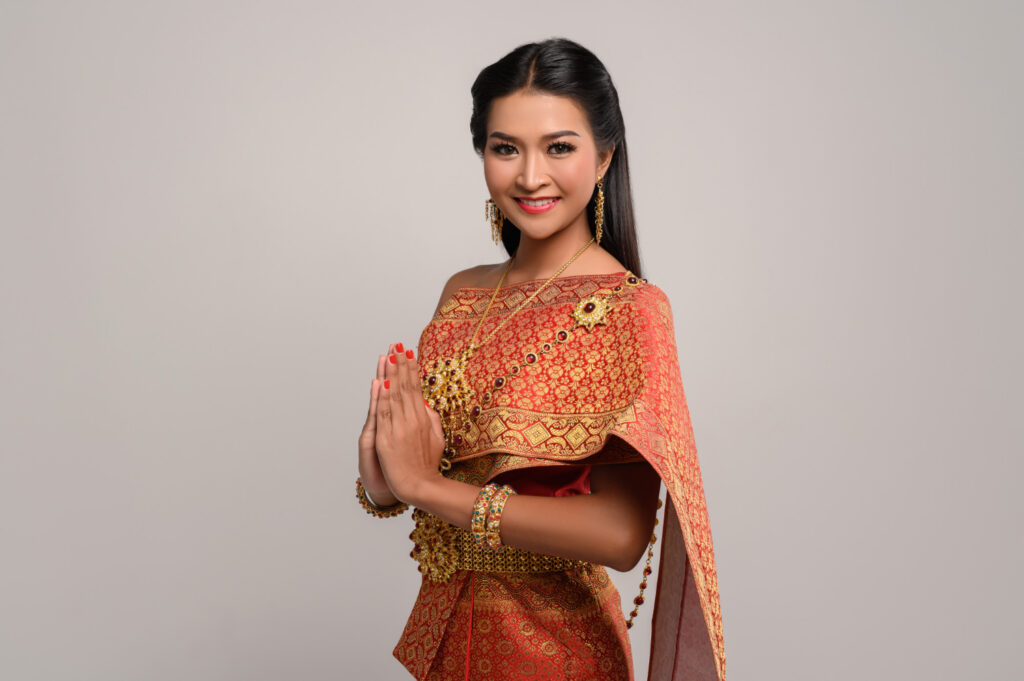
- The traditional Thai wai greeting involves pressing your palms together in front of your chest and bowing your head slightly. When someone greets you with a wai, you can acknowledge it by bringing your palms together.
- Sawasdee (สวัสดี) means “hello”. Add the polite ending khap (ครับ), also written khrap, for male speakers or kha (ค่ะ) for female speakers: “sawasdee khap” or “sawasdee kha”.
- Khop khun (ขอบคุณ) means “thank you”. Use the same polite endings: “khop khun khap” or “khop khun kha”.
- Dress modestly:
- When visiting temples and other religious sites, cover your shoulders and knees. Remove your shoes before entering worship buildings and follow any dress instructions posted at the entrance.
- Be mindful of heads and feet:
- In Thai etiquette, the head is regarded as the highest and most sacred part of the body, while the feet are considered low. Avoid touching people’s heads or using your feet to point at people or objects. When sitting near a Buddha image, keep your feet pointing away from it.
- Public displays of affection:
- Keep public displays of affection discreet, especially at temples and other religious sites.
A polite greeting and attention to local customs are simple ways to show respect during your visit. For more Phuket reading, see our guides to Songkran water fights and Phuket Old Town Walking Street.